
Growth happens when the right person can quickly find relevant work, assess it, share it, and make contact.
JR Reid runs two production brands: Motioneer, his directing studio, and Hands Editorial, his commercial edit shop. Both sites held years of reels, cuts, and credits, but individual projects were difficult for producers and AI assistants to find and use.
We rebuilt both sites so every project has its own page with credits, stills, media, and a direct booking link. Each piece of work can now act as specific, shareable proof when a relevant brief appears.
This is a finite, scoped website rebuild. For ongoing AI management of a single brand, see Just Do It For Me AI.
- Client
- JR Reid: Motioneer and Hands Editorial, Toronto
- Timeline
- April to August 2026
- Scope
- 19 Motioneer projects in 4 categories, 12 Hands Editorial project profiles, a full rebuild moved off WordPress
- Services
- Agent-ready websites, ongoing web and AI support
What changed
Portfolio work became fast, shareable sales proof
31 dedicated project pages across Motioneer and Hands Editorial let producers find and forward relevant work in 52 seconds, supported by a 94 mobile Lighthouse performance score.
More qualified enquiries came through direct project routes
The rebuilt sites generated 11 qualified booking enquiries within 90 days, with seven arriving through contact and booking paths on individual project pages.
A fast, durable, agent-ready foundation now preserves every project relationship
All 31 projects retain their credits, media, embeds, categories, stable URLs, and correct booking routes, while sitemaps, llms.txt, and MCP catalogs support project-level agent discovery.
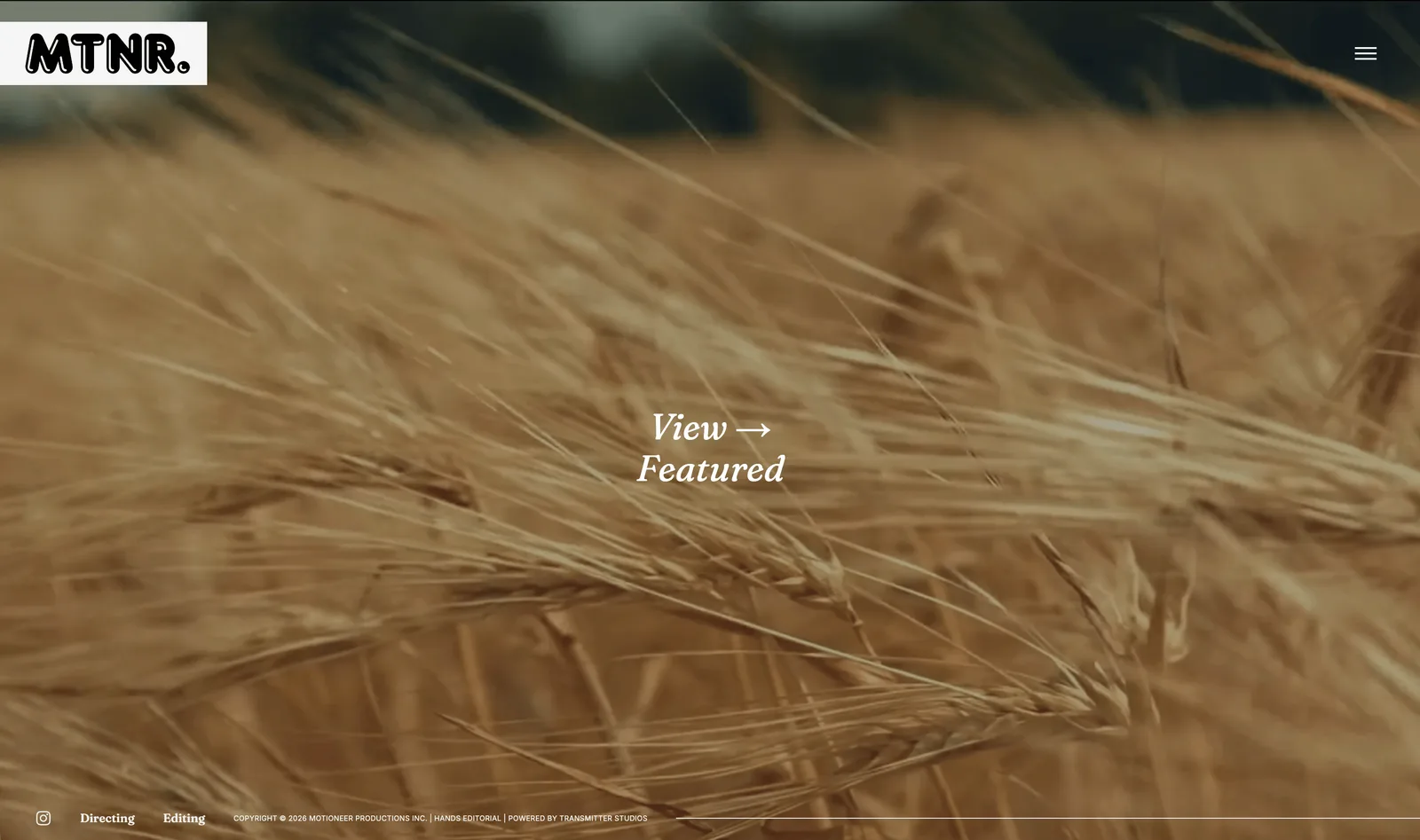
Two production brands. One discovery problem.
The work was already there
Motioneer had 19 projects across four categories: Director Reel, Featured, Commercial, and Documentary.
Hands Editorial had 12 project profiles, dedicated audience pages, and booking available on every page.
Together, the sites held years of reels, cuts, credits, stills, videos, and category links. That work needed to help win the next brief.
For that to happen, producers and the AI assistants they use needed to find relevant projects, assess the details, share clear proof, and reach the correct booking route.
Keeping every project connected
Each project page needed to retain its media, embeds, categories, credits, and featured stills. Projects belonging to multiple categories needed to remain available through each one.
WordPress extraction was one step in the rebuild. The finished sites use structured records, local assets, and clear pages designed for people and AI agents.
The result preserves the depth of both portfolios while making specific work easier to find, understand, share, and act on.
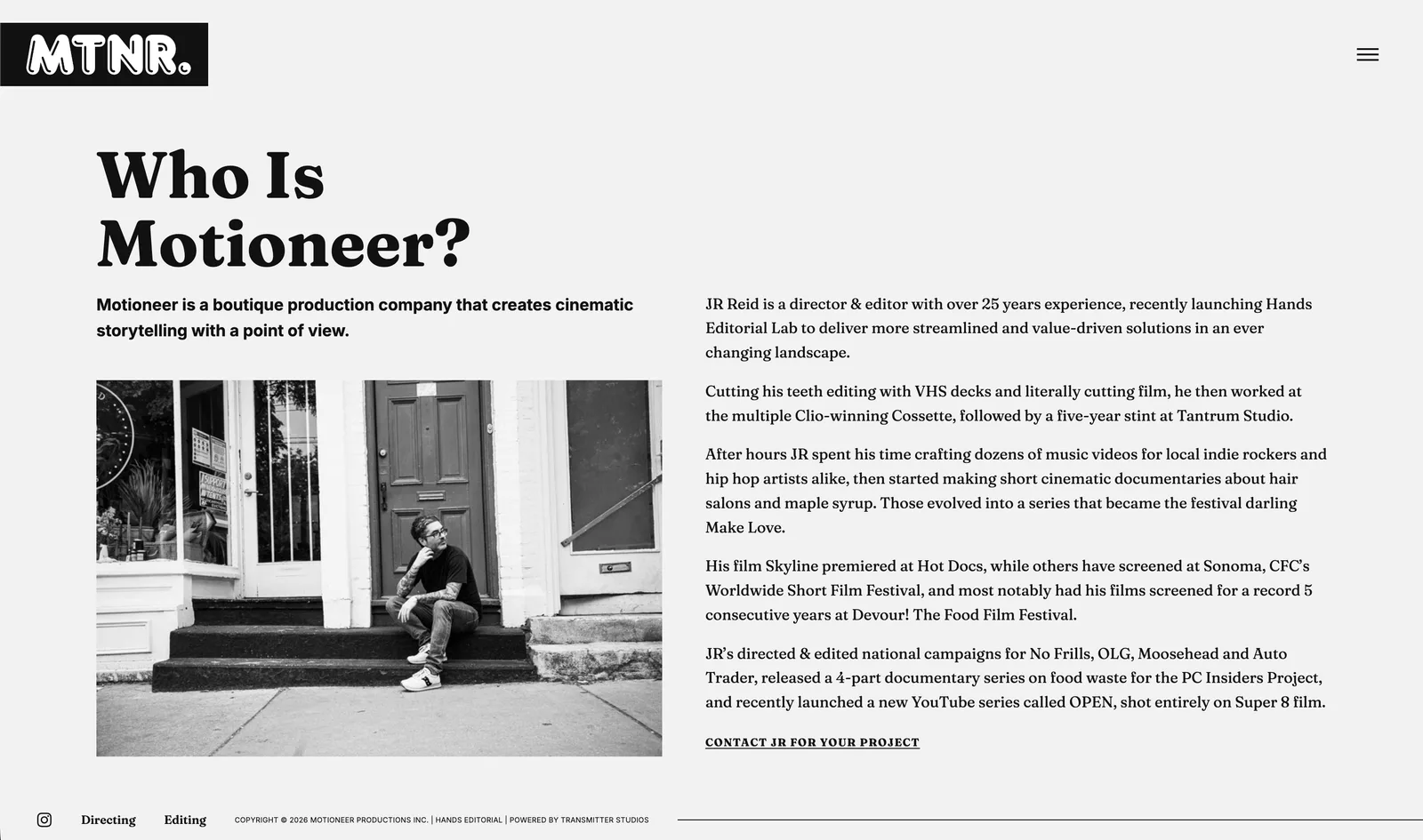
Motioneer. Cinematic work that remains easy to find.
Motioneer’s website has been through six iterations over 20 years. We rebuilt it around the reel, preserving the cinematic experience while giving every featured project a clear role in winning new work.
A producer can move from the reel to a relevant project page, review its credits and stills, then book Motioneer director JR Reid from that URL. An AI assistant can identify the same project and direct someone to the supporting proof.
Years of directing work can now support the next brief without sitting behind a theme.
The work
- 19 project profiles with credits, stills, and embeds
- Four categories: Director Reel, Featured, Commercial, and Documentary
- Projects can appear in every category they belong to
- Dedicated home, about, and contact pages
Why the structure matters
Each project keeps its credits, stills, media, and booking route connected. The page can be assessed on its own, shared with a team, and used as direct proof of relevant experience.
Projects remain available under Director Reel, Featured, Commercial, and Documentary as needed. Featured commercial work stays in both Featured and Commercial.
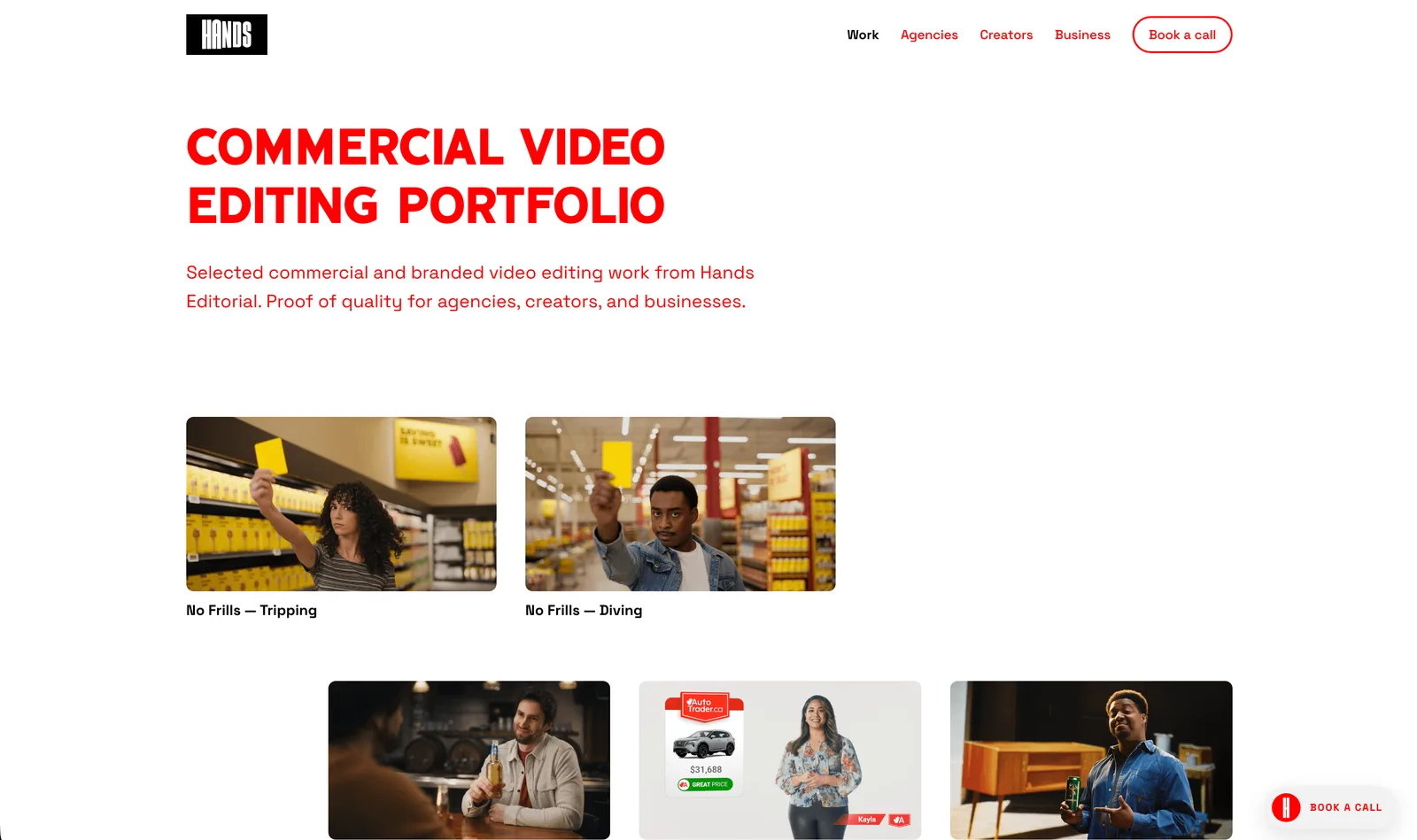
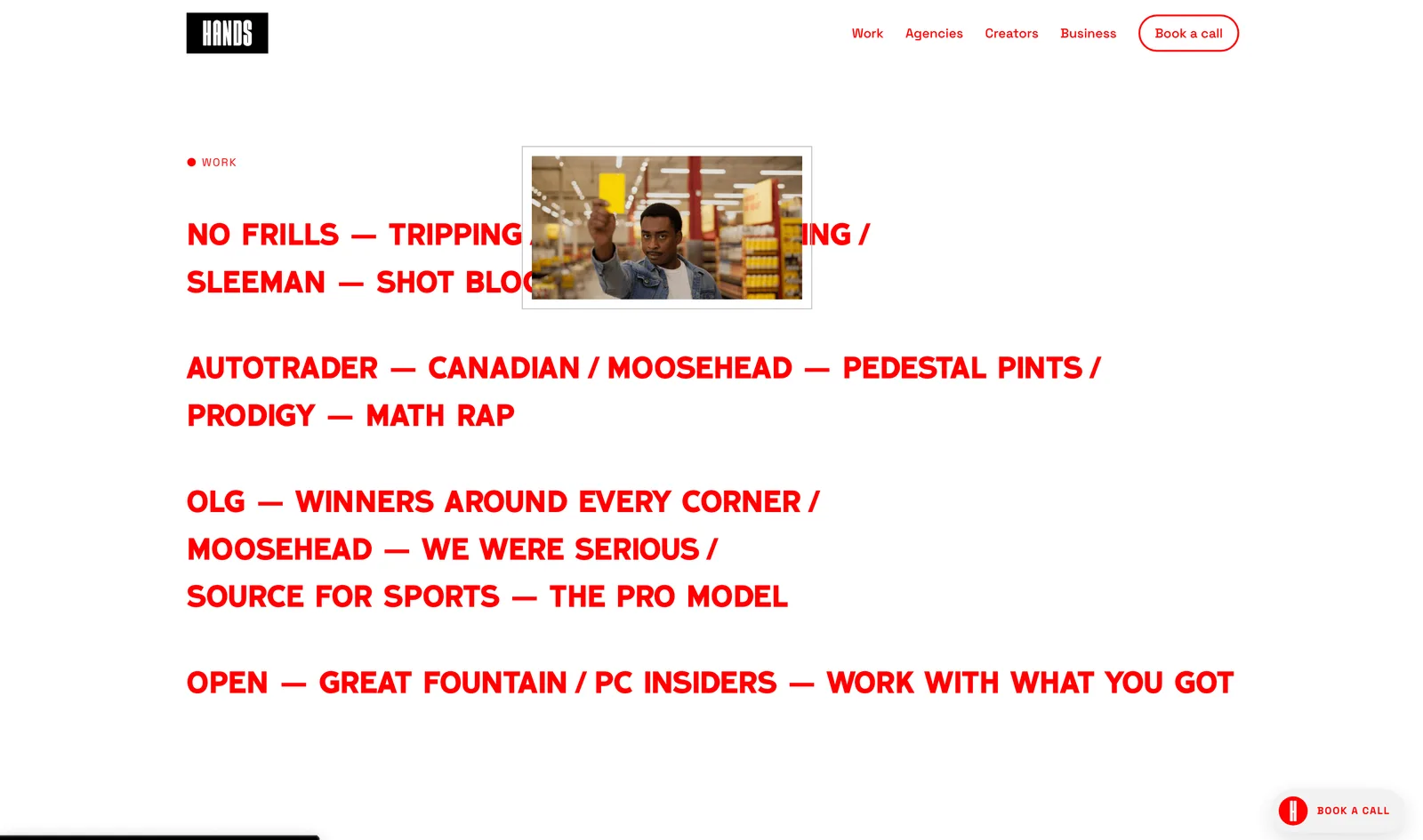
Hands Editorial. Project pages agencies can share.
Hands Editorial is JR Reid’s commercial editorial practice. Its rebuild focuses on how agencies, creators, and businesses evaluate and commission editorial work.
An agency producer can open a specific cut, review the credits and featured stills, share the page internally, and book from that same page. AI assistants can also identify relevant work and surface the correct project URL.
This gives 12 commercial projects a clearer role in new business, with each cut carrying its own context and booking path.
The work
- 12 commercial project profiles with credits, featured stills, and embeds
- Dedicated pages for agencies, creators, and businesses
- A portfolio hub linking to specific cuts
- Booking available on every page
- Service pages for overflow editorial, creator versioning, and campaign delivery
How it works
People can browse the reel and project categories as intended. AI agents can search the project catalog and identify work relevant to a brief.
We first extracted the existing content into verified project records. The new sites were built from those records instead of reusing WordPress page-builder markup.
Find a relevant project
Each project retains its title, excerpt, credits, published date, featured stills, locally stored media, existing video embeds, category membership, and a stable project ID, slug, and canonical URL.
- Motioneer’s 19 projects stay organized across Director Reel, Featured, Commercial, and Documentary
- Projects can appear in multiple categories
- Featured commercial work remains available through both Featured and Commercial
Verify the work
Each project page keeps its credits, stills, and video connected. Producers can confirm who made the work without searching across separate pages or systems.
- Credits and category relationships are stored with each project
- Media uses local paths rather than relying on a CMS host
- Vimeo and self-hosted video embeds are preserved
- The public sites do not call a CMS at runtime
Share one URL and reach the booking route
Every project has a dedicated canonical URL that agencies and producers can forward as proof, with the correct next step attached.
- Sitemaps, llms.txt, MCP catalogs, and .well-known/mcp.json help agents find and cite the same pages
- Motioneer routes enquiries to JR Reid
- Hands Editorial provides booking on every page
Keep the experience fast
The sites prioritize useful content before heavier media. Stills load first. Video loads when viewport size, motion preferences, and data-saving settings permit it.
Performance
- Poster-first hero sections
- Deferred desktop video
- Responsive stills with explicit dimensions
- Self-hosted type
Before
- Years of work sat inside WordPress page-builder markup
- Media depended on a CMS host
- Project credits, categories, and media relationships were vulnerable during rebuilds
- Producers had difficulty isolating one relevant project and sharing it as proof
- AI agents had no project-level catalog for finding or citing specific work
- Booking routes were disconnected from the project being considered
After
- Static pages are generated from structured, verified project records
- Motioneer retains 19 projects across four categories
- Hands Editorial retains 12 commercial project profiles
- Local assets, embeds, credits, and multi-category relationships stay connected
- Every project has a stable, shareable canonical URL
- Each project leads producers to the correct Motioneer contact or Hands booking route
Turn years of underused work into proof that supports new business.
Studio owners, agency owners, production-company leaders, and in-house marketing or growth leads often have years of strong work buried inside outdated portfolio structures.
For Motioneer, the rebuild replaced theme-bound markup with a clear structure for 19 projects across four categories. Producers and AI assistants can move from the reel to a relevant project, review its credits and stills, then find the booking route.
For Hands Editorial, 12 commercial project profiles give each cut context, proof, and a direct booking path. Agencies can share one project URL instead of sending prospects through an entire portfolio.
The same approach makes your existing work easier to find through search and AI-assisted research, understand without additional explanation, cite and share during evaluation, and connect to the correct enquiry or booking route.
This is a finite, scoped website rebuild. It organizes and preserves the work you already have, including relevant content, media, project relationships, and URLs.
Ongoing Just Do It For Me AI management is separate. It keeps projects, metadata, structured data, agent catalogs, and contact paths current as your work and discovery systems change.
See the finished sites at motioneer.ca and handseditorial.com.
FAQ
Why does an agent-ready website matter now?
People increasingly use AI assistants alongside search to find providers, assess experience, and make contact. Clear services, project details, proof, and booking paths help those systems discover, understand, and verify your work.
Who is this for?
This approach is designed for studio owners, agency owners, production-company leaders, and in-house marketing or growth leads with years of valuable portfolio work that remains difficult to find, share, or connect to an enquiry.
Do I need to understand MCP or llms.txt?
No. We set up and verify the discovery infrastructure. You only need to manage the business outcome.
What happens to my existing content, URLs, and search visibility during the rebuild?
We inventory every page, project, credit, media file, category, embed, and historical URL before rebuilding. Existing paths are preserved where appropriate, and moved content is mapped to its replacement. Nothing goes live until content, media, and URL coverage are verified.
Will I lose my Google rankings?
Search rankings cannot be guaranteed during any rebuild. We reduce migration risk by mapping every old URL before launch, preserving appropriate paths, and verifying replacement coverage before the new site goes live.
Is this a one-time rebuild or an ongoing service?
The agent-ready website rebuild is finite and scoped. It covers the agreed inventory, structure, migration, build, URL mapping, verification, and launch. Just Do It For Me AI is ongoing management for a single brand. It keeps projects, credits, metadata, structured data, agent catalogs, and contact paths current after launch.
Why does this need ongoing AI support?
Your work changes, and discovery systems continue to evolve. Ongoing support keeps the site accurate and useful without requiring your team to monitor technical standards or maintain agent-facing infrastructure.
What does it cost?
One person, one price. See Just Do It For Me AI.
Get your site ready for the agentic web.
Your strongest work should be easy to find, verify, share, and connect to an enquiry. Let’s structure your site so people and agents can reach the right project, understand its relevance, and take the next step.